National Scholarships in India
In this comprehensive guide, we cover the top 19 National Scholarships in India, all largely accessible through the National Scholarship Portal (NSP) at scholarships.gov.in — including eligibility criteria, financial benefits, stipend amounts, application deadlines, and clear step-by-step application guidance for each. Identify every scholarship you qualify for. Apply before each deadline. Your education is already funded by the Government of India — you simply need to claim what is rightfully yours.
What Are National Scholarships in India?
National Scholarships are financial aid schemes funded and administered by the Central Government of India — through ministries such as the Ministry of Education, the Ministry of Social Justice and Empowerment, the Ministry of Tribal Affairs, the Ministry of Minority Affairs, the Department of Science and Technology (DST), and the All India Council for Technical Education (AICTE) — with the singular objective of ensuring equitable access to quality education across India’s economic, social, and categorical boundaries.
The majority of national scholarships are disbursed through the National Scholarship Portal (NSP) — a unified digital platform launched under the National e-Governance Plan that brings together pre-matric, post-matric, merit-based, and fellowship-level scholarships under a single transparent, Aadhaar-linked, Direct Benefit Transfer (DBT) framework. This ensures funds reach students directly — without delays or middlemen.
1. Central Sector Scheme of Scholarship for College and University Students (CSSS)
Overview
The Central Sector Scheme of Scholarships (CSSS) is one of the most widely applicable national scholarships in India. Administered by the Ministry of Education, it targets meritorious students from families with modest incomes who have just cleared their Class 12 board examinations and are pursuing regular undergraduate or postgraduate degree programmes. It is among the very few central government scholarships open to all categories — General, OBC, SC, ST — on the basis of academic merit combined with family income.
Eligible Courses / Level of Study
- Regular undergraduate degree programmes (BA, B.Sc., B.Com., B.Tech., MBBS, etc.) at recognised colleges and universities
- Postgraduate programmes (for students who previously received the scholarship at UG level and continue their studies)
- Not applicable for diploma/polytechnic courses or distance education programmes
Eligible Candidates / Who Can Apply
- Students who have passed Class 12 from a recognised State/Central Board
- Must score above the 80th percentile in their respective board examinations (cutoff varies by board and is announced annually)
- Family annual income: below ₹8 lakh per annum
- Must be enrolled in a regular (not distance/correspondence) degree college or university
- Open to all categories — General, SC, ST, OBC, Minority
- Must not be receiving any other Central Government scholarship simultaneously
Benefits & Opportunities
- Direct financial grant — no repayment required
- Disbursed directly to student’s Aadhaar-linked bank account via DBT
- Covers academic expenses including tuition, books, and stationery
Stipend / Financial Value
- ₹12,000 per year for undergraduate students (first three years)
- ₹20,000 per year for postgraduate students
- (Amounts are subject to revision; verify on NSP each cycle)
Duration
- Up to 5 years of undergraduate study; extendable at PG level for scholars who continue
Application Period / Deadline
- Applications open on NSP typically between July and October each year (post Class 12 board result declaration)
- Renewal applications accepted annually
How to Apply
- Register on the National Scholarship Portal (scholarships.gov.in) using Aadhaar number
- Select “Central Sector Scheme of Scholarship” under Ministry of Education
- Fill the application with Class 12 marks, family income details, bank account, and current course details
- Upload income certificate, marksheet, bonafide certificate, and Aadhaar
- Institute verifies the application online
- District/State authority approves; funds disbursed via DBT
Official Website: https://scholarships.gov.in
2. Post Matric Scholarship for SC Students
Overview
The Post Matric Scholarship for Scheduled Caste Students is one of India’s largest and most critical social welfare scholarship programmes. Administered by the Ministry of Social Justice and Empowerment, it supports SC students pursuing education at any level beyond Class 10 — from Class 11 and 12, to undergraduate, postgraduate, and professional degrees. It is a cornerstone of India’s constitutional commitment to uplifting the Scheduled Caste community through education.
Eligible Courses / Level of Study
- Class 11 and Class 12 (Higher Secondary)
- Undergraduate degrees (BA, B.Sc., B.Com., B.Tech., MBBS, LLB, etc.)
- Postgraduate degrees (MA, M.Sc., MBA, M.Tech., etc.)
- PhD and research programmes
- Professional and technical courses, ITI, polytechnic diploma programmes
- Certificate courses of at least 1 year duration recognised by a government authority
Eligible Candidates / Who Can Apply
- Students belonging to Scheduled Castes (with valid caste certificate issued by competent authority)
- Indian nationals studying in India at a recognised institution
- Family annual income: below ₹2.5 lakh per annum (income limit revised periodically; verify on NSP)
- Must be enrolled as a regular student (not distance/open university for most courses)
- The scholarship covers hostellers and day scholars at different rates
Benefits & Opportunities
- Maintenance allowance (monthly stipend) based on course level and residential status
- Reimbursement of compulsory non-refundable fees charged by the institution
- Study tour charges, thesis typing/printing charges for research scholars
- Book allowance for students with visual disabilities
Stipend / Financial Value
Maintenance allowance per month (indicative rates — subject to revision):
- Group I (Degree and PG level — Professional courses like Medicine, Engineering, Management, Agriculture): Hosteller: ₹1,200/month; Day Scholar: ₹550/month
- Group II (Other professional courses, B.Pharma, LLB, BEd, etc.): Hosteller: ₹820/month; Day Scholar: ₹530/month
- Group III (Graduation level — BA, B.Sc., B.Com.): Hosteller: ₹570/month; Day Scholar: ₹300/month
- Group IV (Class 11 and 12, ITI, etc.): Hosteller: ₹380/month; Day Scholar: ₹230/month
- (All figures indicative; amounts revised periodically — verify on NSP or Ministry website)
Duration
- Duration of the enrolled course
Application Period / Deadline
- Applications typically open on NSP between July and November each year
How to Apply
- Register/log in on NSP (scholarships.gov.in)
- Select “Post Matric Scholarship for SC Students” under Ministry of Social Justice and Empowerment
- Fill application — caste certificate, income certificate, institution details, bank details
- Submit and have application verified by institution and district welfare officer
Official Website: https://scholarships.gov.in
3. Post Matric Scholarship for ST Students
Overview
The Post Matric Scholarship for Scheduled Tribe Students, administered by the Ministry of Tribal Affairs, mirrors the SC Post Matric Scholarship in structure but is specifically designed for India’s Scheduled Tribe communities. Given the geographical remoteness, linguistic diversity, and social marginalisation faced by many ST communities, this scholarship plays a vital role in ensuring tribal students can pursue education beyond Class 10.
Eligible Courses / Level of Study
- Class 11 and 12
- Undergraduate, postgraduate, and PhD programmes
- Professional courses (Engineering, Medical, Law, MBA, Agriculture)
- ITI, diploma, and polytechnic programmes
- Certificate courses (minimum 1 year, recognised by government)
Eligible Candidates / Who Can Apply
- Students belonging to Scheduled Tribes as notified by the Government of India (valid ST certificate required)
- Indian nationals studying in India
- Family annual income: below ₹2.5 lakh per annum (verify current limit on NSP)
- Open to hostellers and day scholars at different benefit rates
- Must be studying at a government-recognised institution
Benefits & Opportunities
- Maintenance allowance (monthly stipend) based on course group and residential status
- Reimbursement of compulsory non-refundable institutional fees
- Study tour charges (for applicable courses)
- Thesis/dissertation support for research scholars
- Book allowance for visually impaired ST students
Stipend / Financial Value
- Maintenance allowance rates are structured identically to the SC Post Matric Scholarship (see above) across Groups I to IV
- Additionally, full reimbursement of compulsory fees (tuition, exam, library, sports fees) is provided — making the total benefit significantly higher than the maintenance allowance alone
- (All amounts subject to annual revision — verify on official NSP or Ministry of Tribal Affairs website)
Duration
- Duration of the enrolled programme
Application Period / Deadline
- Applications open on NSP between July and November each year
How to Apply
- Register on NSP with Aadhaar
- Select “Post Matric Scholarship for ST Students” under Ministry of Tribal Affairs
- Submit ST certificate, income certificate, institution enrolment proof, and bank details
- Institution verifies; District Tribal Welfare Officer approves
Official Website: https://scholarships.gov.in
4. Post Matric Scholarship for OBC Students
Overview
The Post Matric Scholarship for Other Backward Classes (OBC), administered by the Ministry of Social Justice and Empowerment, provides financial support to OBC students pursuing education beyond Class 10. It acknowledges that Other Backward Classes — while not as severely marginalised as SC/ST communities in all contexts — still face significant socio-economic barriers to higher education, particularly in rural areas.
Eligible Courses / Level of Study
- Class 11 and 12
- Undergraduate, postgraduate, and research programmes
- Technical, professional, and vocational courses
Eligible Candidates / Who Can Apply
- Students belonging to Other Backward Classes (valid OBC certificate — non-creamy layer — issued by competent authority)
- Indian nationals
- Family annual income: below ₹1.5 lakh per annum (income cap for OBC Post Matric is stricter than SC/ST — verify on NSP each year)
- Enrolled as regular students in government-recognised institutions
Benefits & Opportunities
- Maintenance allowance based on course level and residential status
- Reimbursement of compulsory non-refundable fees
- Covers hostellers and day scholars at different rates
Stipend / Financial Value
- Maintenance allowance rates are similar in structure to SC/ST Post Matric scholarships but may differ slightly in quantum per group
- Approximately ₹230–₹1,000 per month depending on course group and residential status
- (Exact figures are subject to state-level implementation variations and annual revision — verify on NSP)
Duration
- Duration of the enrolled course
Application Period / Deadline
- Applications open on NSP typically between July and November each year
How to Apply
- Register on NSP with Aadhaar
- Select “Post Matric Scholarship for OBC” under Ministry of Social Justice and Empowerment
- Submit OBC (non-creamy layer) certificate, income certificate, institution details
- Institution and state welfare authority verify and approve
Official Website: https://scholarships.gov.in
5. Pre Matric Scholarship for SC Students
Overview
The Pre Matric Scholarship for SC Students, funded by the Ministry of Social Justice and Empowerment, targets Scheduled Caste students studying in Classes 9 and 10 — a critical juncture where dropout rates among marginalised communities are highest. By providing financial support at this stage, the scheme ensures SC students do not leave school just before reaching the threshold of higher education.
Eligible Courses / Level of Study
- Classes 9 and 10 only (Pre-Matric stage)
- Students in government or government-aided schools
Eligible Candidates / Who Can Apply
- Students belonging to Scheduled Castes
- Parents/guardians must be engaged in occupations considered unclean or hazardous (sweepers, scavengers, tanners, flayers, etc.) for the scholarship’s targeted component — OR students whose family income is below threshold for the general Pre Matric scheme
- Family annual income: below ₹2.5 lakh per annum
- Must be a regular student at a government-recognised school
Benefits & Opportunities
- Monthly maintenance allowance for day scholars and hostellers
- Ad hoc grant for books and stationery
- Covers academic expenses during the crucial Class 9–10 years
Stipend / Financial Value
- Day Scholar: ₹150 per month (Class 9 and 10)
- Hosteller: ₹350 per month (Class 9 and 10)
- Ad hoc grant: ₹750 per year (for books and stationery)
- (Amounts indicative; subject to revision — verify on NSP)
Duration
- 2 years (Class 9 and Class 10)
Application Period / Deadline
- Applications open on NSP between July and September each academic year
How to Apply
- Register on NSP (student or parent registers with Aadhaar)
- Select “Pre Matric Scholarship for SC Students”
- Submit caste certificate, income certificate, school enrolment certificate, and bank details (parent’s account for younger students)
- School verifies; District Social Welfare Officer approves
Official Website: https://scholarships.gov.in
6. Pre Matric Scholarship for ST Students
Overview
The Pre Matric Scholarship for ST Students, administered by the Ministry of Tribal Affairs, provides financial support to Scheduled Tribe students in Classes 9 and 10. Given that many ST students study in remote tribal belt schools with limited infrastructure, this scholarship also serves as an incentive to keep tribal children enrolled through the critical pre-matric years.
Eligible Courses / Level of Study
- Classes 9 and 10
- Government and government-recognised private schools
Eligible Candidates / Who Can Apply
- Students belonging to Scheduled Tribes
- Family annual income: below ₹2.5 lakh per annum
- Regular students at recognised schools
- Open to hostellers and day scholars
Benefits & Opportunities
- Monthly maintenance allowance
- Annual book and stationery grant
- Hostel accommodation support where applicable
Stipend / Financial Value
- Day Scholar: ₹150 per month
- Hosteller: ₹350 per month
- Ad hoc grant: ₹750 per year
- (Figures indicative; subject to revision — verify on NSP and Ministry of Tribal Affairs)
Duration
- 2 years (Classes 9 and 10)
Application Period / Deadline
- Applications open on NSP typically between July and September each year
How to Apply
- Register on NSP with Aadhaar
- Select “Pre Matric Scholarship for ST Students” under Ministry of Tribal Affairs
- Upload ST certificate, income certificate, school enrolment, and bank details
- School and District Tribal Welfare Officer verify and approve
Official Website: https://scholarships.gov.in
7. Pre Matric Scholarship for OBC Students
Overview
The Pre Matric Scholarship for OBC Students, administered by the Ministry of Social Justice and Empowerment, supports Other Backward Class students in Classes 9 and 10. It is particularly targeted at OBC families engaged in certain traditional occupations and ensures that children from these communities stay enrolled through the critical secondary school years.
Eligible Courses / Level of Study
- Classes 9 and 10
- Government and government-aided recognised schools
Eligible Candidates / Who Can Apply
- Students belonging to Other Backward Classes (valid OBC non-creamy layer certificate)
- Family annual income: below ₹44,500 per annum for urban families; ₹27,000 per annum for rural families (income limits set per original scheme guidelines — states may revise; verify on NSP)
- Parents must be engaged in specific traditional occupations as notified under the scheme (varies by state)
- Regular students at recognised institutions
Benefits & Opportunities
- Monthly maintenance allowance
- Annual stationery/book grant
Stipend / Financial Value
- Day Scholar: ₹100–₹150 per month (Class 9 and 10)
- Hosteller: ₹300–₹350 per month
- Ad hoc grant: ₹500–₹750 per year
- (Rates vary by state implementation; verify on NSP)
Duration
- 2 years (Classes 9 and 10)
Application Period / Deadline
- Applications open on NSP between July and September each year
How to Apply
- Register on NSP
- Select “Pre Matric Scholarship for OBC” under Ministry of Social Justice and Empowerment
- Submit OBC certificate, income certificate, school details, and bank account
- School and state social welfare authority verify
Official Website: https://scholarships.gov.in
8. Pre Matric Scholarship for Minorities
Overview
The Pre Matric Scholarship for Minorities, administered by the Ministry of Minority Affairs, supports students from six notified minority communities — Muslim, Christian, Sikh, Buddhist, Parsi (Zoroastrian), and Jain — studying in Classes 1 through 10. It is one of the broadest pre-matric schemes in scope, covering even primary-level students in Classes 1 to 8, unlike the SC/ST/OBC pre-matric schemes which begin at Class 9.
Eligible Courses / Level of Study
- Classes 1 to 10 (both primary and secondary stages)
- Government and private government-recognised schools
Eligible Candidates / Who Can Apply
- Students belonging to any of the six notified minority communities: Muslim, Christian, Sikh, Buddhist, Parsi, or Jain
- Family annual income: below ₹1 lakh per annum
- Minimum 50% marks in the previous class
- Must be enrolled at a government-recognised school
- At least 30% of scholarships are reserved for girl students
Benefits & Opportunities
- Maintenance allowance (monthly)
- Admission fee and tuition fee reimbursement (for Classes 9 and 10)
- Annual book and stationery grant
Stipend / Financial Value
- Classes 1 to 5:
- Day Scholar: ₹100 per month; Ad hoc grant: ₹750 per year
- Classes 6 to 8:
- Day Scholar: ₹100 per month; Ad hoc grant: ₹1,000 per year
- Classes 9 to 10:
- Day Scholar: ₹100 per month; Hosteller: ₹600 per month; Ad hoc grant: ₹1,000 per year
- (All figures subject to revision — verify on NSP and Ministry of Minority Affairs)
Duration
- Duration of enrollment from Class 1 to Class 10 (annual renewal required)
Application Period / Deadline
- Applications open on NSP between July and October each year
How to Apply
- Register on NSP with Aadhaar (parent/guardian for younger students)
- Select “Pre Matric Scholarship for Minorities” under Ministry of Minority Affairs
- Submit minority community declaration, income certificate, school enrolment, and bank details
- School verifies; state minority welfare authority approves
Official Website: https://scholarships.gov.in
9. Post Matric Scholarship for Minorities
Overview
The Post Matric Scholarship for Minorities, run by the Ministry of Minority Affairs, supports students from the six notified minority communities pursuing education beyond Class 10 — from Class 11 right through to postgraduate, professional, and technical degrees. It is one of the most comprehensive post-matric support schemes for any specific demographic in India.
Eligible Courses / Level of Study
- Class 11 and 12
- Undergraduate degree programmes (all disciplines)
- Postgraduate programmes
- Professional and technical courses (Engineering, Medicine, Law, MBA, etc.)
- ITI, polytechnic, and diploma courses
- PhD and MPhil research programmes
Eligible Candidates / Who Can Apply
- Students from Muslim, Christian, Sikh, Buddhist, Parsi, or Jain communities
- Indian nationals studying in India at government-recognised institutions
- Family annual income: below ₹2 lakh per annum
- Minimum 50% marks in the previous qualifying examination
- At least 30% of awards reserved for girl students
Benefits & Opportunities
- Maintenance allowance (monthly) for hostellers and day scholars
- Reimbursement of compulsory non-refundable fees
- Study tour charges and thesis support for research scholars
Stipend / Financial Value
- Group I (Professional PG — ME, M.Tech., MBA, MCA, MBBS PG, etc.): Hosteller: ₹1,200/month; Day Scholar: ₹550/month
- Group II (Other professional courses — BEd, LLB, B.Pharma, etc.): Hosteller: ₹820/month; Day Scholar: ₹530/month
- Group III (Graduation — BA, B.Sc., B.Com.): Hosteller: ₹570/month; Day Scholar: ₹300/month
- Group IV (Class 11–12, ITI, vocational): Hosteller: ₹380/month; Day Scholar: ₹230/month
- (All amounts subject to revision — verify on NSP)
Duration
- Duration of the enrolled programme
Application Period / Deadline
- Applications open on NSP between July and November each year
How to Apply
- Register on NSP
- Select “Post Matric Scholarship for Minorities” under Ministry of Minority Affairs
- Submit community declaration, income certificate, previous marksheet, institution enrolment, and bank details
- Institution verifies; state minority welfare authority approves
Official Website: https://scholarships.gov.in
10. Merit-cum-Means Scholarship for Professional and Technical Courses (Minorities)
Overview
The Merit-cum-Means (MCM) Scholarship for Professional and Technical Courses is administered by the Ministry of Minority Affairs and is specifically designed to support minority students who are both academically meritorious and from modest economic backgrounds — pursuing technical and professional education at the undergraduate level. Unlike the Post Matric Scholarship (which is broadly income-based), this scheme combines merit with means, making it slightly more competitive and more financially rewarding.
Eligible Courses / Level of Study
- Undergraduate professional and technical courses — B.Tech., B.E., MBBS, BDS, B.Arch., B.Pharma, Nursing, LLB (5-year integrated), Hotel Management, Agriculture, Mass Communication, Fashion Design, and other AICTE/UGC/MCI-approved professional courses
- Minimum course duration of 2 years
Eligible Candidates / Who Can Apply
- Students from Muslim, Christian, Sikh, Buddhist, Parsi, or Jain communities
- Must be enrolled in a recognised professional/technical UG programme
- Family annual income: below ₹2.5 lakh per annum
- Minimum 50% marks in Class 12 or last qualifying examination
- At least 30% of scholarships reserved for girls
Benefits & Opportunities
- Course fee reimbursement (up to a ceiling per year)
- Maintenance allowance for living and academic expenses
- Covers both hostellers and day scholars
Stipend / Financial Value
- Course/Tuition Fee: Up to ₹20,000 per year (reimbursed directly to institution)
- Maintenance Allowance:
- Hosteller: ₹1,000 per month
- Day Scholar: ₹500 per month
- (Total annual value for a hosteller: approximately ₹32,000 — subject to revision)
Duration
- Duration of the enrolled professional course (typically 4–5 years)
Application Period / Deadline
- Applications open on NSP between August and October each year
How to Apply
- Register on NSP
- Select “Merit-cum-Means Scholarship for Professional and Technical Courses CS” under Ministry of Minority Affairs
- Submit minority certificate, income certificate, Class 12 marksheet, admission proof, and bank details
- Institution and state authority verify
Official Website: https://scholarships.gov.in
11. Begum Hazrat Mahal National Scholarship
Overview
The Begum Hazrat Mahal National Scholarship is one of India’s most culturally significant scholarships for meritorious girl students from minority communities. Named after Begum Hazrat Mahal — the revered queen of Awadh and one of the first leaders of the 1857 revolt against British rule — this scholarship is administered by the Maulana Azad Education Foundation (MAEF) under the Ministry of Minority Affairs. It honours a legacy of women’s courage by investing in the education of today’s minority girls.
Eligible Courses / Level of Study
- Students studying in Classes 9 to 12 at government-recognised schools
- Girls only
Eligible Candidates / Who Can Apply
- Girl students only from Muslim, Christian, Sikh, Buddhist, Parsi, or Jain communities
- Must have scored minimum 50% marks in the previous qualifying examination
- Family annual income: below ₹2 lakh per annum
- Must not be receiving any other scholarship from the Government of India at the same time
Benefits & Opportunities
- Annual scholarship for academic expenses
- Encourages minority girls to continue education through Class 12 and onward
- No bond or service obligation
Stipend / Financial Value
- Classes 9 and 10: ₹5,000 per year
- Classes 11 and 12: ₹6,000 per year
- (Amounts verified from MAEF official guidelines; subject to revision)
Duration
- Annual; renewed each year based on academic performance
Application Period / Deadline
- Applications open typically between October and December each year
- Apply through MAEF’s official portal (not NSP in all cases — verify current application channel)
How to Apply
- Visit the Maulana Azad Education Foundation portal or check NSP for current year listing
- Fill the application form with personal, academic, and income details
- Submit minority community certificate, income certificate, marksheet, school bonafide, and bank details
- School principal attests and verifies the application
- MAEF processes and disburses funds
Official Website: https://scholarships.gov.in/public/schemeGuidelines/1053_G.pdf
12. INSPIRE Scholarship — SHE (Scholarship for Higher Education) by DST
Overview
INSPIRE stands for Innovation in Science Pursuit for Inspired Research — a flagship national programme of the Department of Science and Technology (DST), Government of India. The SHE (Scholarship for Higher Education) component of INSPIRE is specifically designed to attract exceptionally talented young students into the natural and basic sciences stream at the undergraduate and postgraduate level. It is one of India’s highest-value merit scholarships and carries enormous prestige in the scientific community.
Eligible Courses / Level of Study
- Undergraduate (BSc) and Postgraduate (MSc) programmes in Natural and Basic Sciences — Physics, Chemistry, Mathematics, Biology, Statistics, Geology, Astrophysics, Biochemistry, Microbiology, Environmental Science, and related disciplines
- Not applicable for Engineering, Medicine, Technology, or Applied Sciences streams
Eligible Candidates / Who Can Apply
- Students who have passed Class 12 with top 1% marks in their respective State/Central Board OR are in the top 10,000 in JEE Advanced / NEET and have chosen to pursue basic sciences at BSc level instead of engineering/medicine
- Must be enrolled in a BSc or MSc programme in natural/basic sciences at a recognised college/university
- No specific income criterion — this is purely a merit-based scholarship
- Indian nationals only
Benefits & Opportunities
- Annual scholarship for pursuing basic sciences (a stream where fewer students go despite it being foundational to all research)
- Summer research attachment at premier research institutions (IISERs, IITs, national labs, TIFR)
- Mentorship from India’s leading scientists
- Gateway to a career in frontier scientific research
Stipend / Financial Value
- ₹80,000 per year (₹6,667 per month approximately) for BSc and MSc students
- (One of the highest annual scholarship values among central government merit scholarships)
Duration
- Up to 5 years (3 years BSc + 2 years MSc, if the student continues in natural sciences)
Application Period / Deadline
- Applications are typically accepted by nominated institutions and through the INSPIRE portal — applications open around August–November after Class 12 results
- DST also contacts top rankers directly in some states through board channels
How to Apply
- Visit the official INSPIRE portal: inspire-dst.gov.in
- Register and apply online with Class 12 marks, board rank, and proof of enrolment in BSc (Natural Sciences)
- Upload relevant certificates including proof of top 1% rank or JEE/NEET rank card
- Institution verifies enrolment in natural sciences programme
- DST processes and disburses scholarship annually
Official Website: https://online-inspire.gov.in
13. AICTE Pragati Scholarship for Girls
Overview
The AICTE Pragati Scholarship is administered by the All India Council for Technical Education (AICTE) — the statutory body governing technical education in India — specifically to support girl students pursuing technical education (engineering and technology) at the diploma and undergraduate level. The name “Pragati” means progress — and this scholarship is exactly that: a step toward gender parity in India’s technical education system.
Eligible Courses / Level of Study
- Degree level: First year of B.Tech./B.E./B.Arch./B.Planning at AICTE-approved institutions
- Diploma level: First year of Diploma in Technical Education at AICTE-approved polytechnics
- Lateral entry students are also eligible (second year direct entry)
Eligible Candidates / Who Can Apply
- Girl students only
- Must be admitted to the first year (or second year via lateral entry) of an AICTE-approved technical degree or diploma programme
- Family annual income: below ₹8 lakh per annum
- Only one girl per family is eligible (if two sisters are both in technical education, only one can receive Pragati)
- Must not be receiving any other government scholarship simultaneously
Benefits & Opportunities
- Annual grant covering tuition and other academic expenses
- Incentivises girls to pursue technical education — a field historically dominated by male students
- Direct transfer to student bank account
Stipend / Financial Value
- ₹50,000 per year (approximately ₹30,000 towards tuition fees + ₹20,000 as annual contingency/incidental expenses)
- (Subject to revision by AICTE annually)
Duration
- Up to 4 years for degree students; up to 3 years for diploma students (subject to annual renewal based on academic performance)
Application Period / Deadline
- Applications open on the AICTE portal and NSP typically between August and November each year
How to Apply
- Register on NSP (scholarships.gov.in) or the AICTE scholarship portal
- Select “AICTE Pragati Scholarship for Girls”
- Fill the application — institution name (confirm it is AICTE-approved), course details, family income, bank details
- Upload income certificate, Class 12 marksheet, admission proof, and Aadhaar
- Institution verifies AICTE approval and student enrollment
- Funds disbursed via DBT
Official Website: https://scholarships.gov.in and https://www.aicte-india.org
14. AICTE Saksham Scholarship for Differently-Abled Students
Overview
The AICTE Saksham Scholarship — “Saksham” meaning capable or empowered — is administered by AICTE to support differently-abled students pursuing technical education at the diploma or undergraduate degree level. It is India’s most prominent central government scholarship specifically for students with disabilities in the technical education stream and reflects a commitment to inclusive education.
Eligible Courses / Level of Study
- First year of B.Tech./B.E./B.Arch./B.Planning at AICTE-approved institutions (degree level)
- First year of Diploma in Technical Education at AICTE-approved polytechnics
- Lateral entry (second year direct admission) students are also eligible
Eligible Candidates / Who Can Apply
- Students with at least 40% disability — including locomotor disability, visual impairment, hearing impairment, speech and language disability, intellectual disability, autism spectrum disorders, and multiple disabilities
- Valid disability certificate from a competent medical authority required
- Family annual income: below ₹8 lakh per annum
- Admitted to an AICTE-approved institution for a technical degree or diploma
- Must not be receiving any other government scholarship simultaneously
Benefits & Opportunities
- Annual financial grant for tuition and academic expenses
- Promotes participation of differently-abled students in STEM and technical fields
- Direct bank transfer via DBT
Stipend / Financial Value
- ₹50,000 per year (structured similarly to Pragati — tuition support + incidental expenses)
- (Subject to annual revision by AICTE)
Duration
- Up to 4 years for degree; up to 3 years for diploma (with annual renewal)
Application Period / Deadline
- Applications open on NSP between August and November each year
How to Apply
- Register on NSP
- Select “AICTE Saksham Scholarship for Differently Abled Students”
- Submit disability certificate (minimum 40% — issued by competent medical authority), income certificate, admission proof, and Aadhaar
- AICTE-approved institution verifies enrolment
- Funds disbursed via DBT
Official Website: https://scholarships.gov.in and https://www.aicte-india.org
15. Prime Minister’s Scholarship Scheme (PMSS) for Wards of Ex-Servicemen and Ex-Coast Guard Personnel
Overview
The Prime Minister’s Scholarship Scheme (PMSS) is a deeply respectful initiative of the Ministry of Defence, administered through the Kendriya Sainik Board (KSB), that honours the sacrifice of India’s armed forces by supporting the higher education of their children and widows. It acknowledges that many ex-servicemen retire at young ages and may not have the financial resources to fund professional degrees for their wards — and bridges that gap with dignity.
Eligible Courses / Level of Study
- Professional degree courses at the undergraduate level:
- BE/B.Tech., MBBS, BDS, BBA, BCA, B.Sc. (Nursing/Agriculture/Veterinary), B.Pharma, MBA (5-year integrated), LLB (5-year integrated), Hotel Management, and other professional programmes
- Minimum course duration: 2 years
- Must be in a government-recognised institution
- Not applicable for distance/correspondence courses or BA/B.Sc./B.Com. regular degree programmes
Eligible Candidates / Who Can Apply
- Wards (sons, daughters) and widows of:
- Ex-Servicemen and Ex-Coast Guard personnel
- Armed forces personnel killed in action or disabled during service (priority category)
- Must have passed Class 12 with minimum 60% (for general category wards)
- Family annual income: below ₹16 lakh per annum (revised limit — verify on KSB portal)
- Priority: widows of ex-servicemen and wards of those killed/disabled in action receive special consideration
Benefits & Opportunities
- Monthly scholarship for the duration of the professional course
- Paid directly to student’s bank account
- No service bond or repayment obligation
Stipend / Financial Value
- ₹2,500 per month for male wards
- ₹3,000 per month for female wards
- (Annual value: ₹30,000–₹36,000 per year — subject to revision by Ministry of Defence)
Duration
- Duration of the professional degree course (typically 4–5 years)
Application Period / Deadline
- Applications typically open between June and August each year on the KSB portal
- Fresh and renewal applications both accepted
How to Apply
- Register on the Kendriya Sainik Board portal: ksb.gov.in
- Fill the online application — provide ex-serviceman’s details, discharge book, service record
- Upload Class 12 marksheet, income certificate, admission letter, and bank details
- Application verified by the respective Rajya Sainik Board/Zila Sainik Board
- KSB processes and disburses scholarship
Official Website: https://ksb.gov.in
16. National Means-cum-Merit Scholarship (NMMS)
Overview
The National Means-cum-Merit Scholarship (NMMS) is one of India’s most impactful school-level scholarships, administered by the Ministry of Education through the Department of School Education and Literacy. It targets Class 8 students from government schools who are academically bright but economically disadvantaged, with the specific goal of preventing dropout at the secondary school stage and encouraging them to complete schooling through Class 12.
Eligible Courses / Level of Study
- Awarded at the Class 8 level and continues through Classes 9 to 12
- Students must be in government, government-aided, or local body schools — NOT applicable for private unaided schools or Kendriya/Navodaya Vidyalayas
- Must continue studying in regular school through Class 12 to receive all four years of the scholarship
Eligible Candidates / Who Can Apply
- Students currently in Class 8 at a government or government-aided school
- Must have scored minimum 55% marks in Class 7 (relaxation of 5% for SC/ST students)
- Family annual income: below ₹3.5 lakh per annum
- Must clear the NMMS Examination — a state-level two-part test comprising:
- Mental Ability Test (MAT) — reasoning and critical thinking
- Scholastic Aptitude Test (SAT) — Science, Social Studies, and Mathematics (Class 7 and 8 level)
- Minimum qualifying score in NMMS exam: 40% (35% for SC/ST)
Benefits & Opportunities
- Annual scholarship to cover school-level expenses and encourage continuation of education
- Builds a pipeline of talented government-school students into higher education
- Acts as early recognition of merit from modest backgrounds
Stipend / Financial Value
- ₹12,000 per year (₹1,000 per month) for Classes 9 to 12
- Disbursed directly to student’s bank account via SBI (through State Channel Accounts)
- (One of the longest-running school scholarship programmes in India)
Duration
- 4 years — Classes 9, 10, 11, and 12 (conditional on passing each class with minimum 55%)
Application Period / Deadline
- NMMS Examination is conducted state-wise, typically between October and December
- Applications for the exam submitted through State Education Departments — timelines vary by state
How to Apply
- Obtain application form from your school (Class 8 — government/aided school only)
- Fill the form and submit to the school principal for forwarding to the District Education Officer
- Register for the NMMS Examination through the State Education Department
- Clear both MAT and SAT with qualifying scores
- Selected students’ details sent to NCERT; scholarship processed via NSP/State Education Department
Official Website: https://scholarships.gov.in and https://ncert.nic.in
17. National Fellowship for Other Backward Classes (NFOBC)
Overview
The National Fellowship for Other Backward Classes (NFOBC), administered by the Ministry of Social Justice and Empowerment and implemented through the University Grants Commission (UGC), provides financial support to OBC students pursuing MPhil and PhD research at Indian universities. It operates on the same structure as the JRF/SRF (Junior/Senior Research Fellowship) system, recognising that OBC students are significantly underrepresented in India’s research and doctoral ecosystem.
Eligible Courses / Level of Study
- MPhil and PhD programmes at recognised Indian universities
- Full-time research only — not part-time, distance, or correspondence
Eligible Candidates / Who Can Apply
- Students belonging to Other Backward Classes (non-creamy layer OBC certificate from competent authority)
- Must have cleared the NET (National Eligibility Test) conducted by UGC or CSIR — OR been admitted to a PhD programme through the university’s JRF/admission process
- Family annual income: below ₹8 lakh per annum (verify current limit on UGC/NSP)
- Open to all disciplines — sciences, humanities, social sciences, commerce, arts
- Age limit: typically 30 years at the time of application
Benefits & Opportunities
- Monthly fellowship (stipend) comparable to UGC-JRF rates
- Annual contingency grant for research expenses (books, fieldwork, stationery, lab consumables)
- Supports OBC researchers through 2 years of JRF and then 3 years of SRF level
- House Rent Allowance (HRA) as per Central Government norms where applicable
Stipend / Financial Value
- Junior Research Fellowship (first 2 years): ₹31,000 per month
- Senior Research Fellowship (subsequent 3 years): ₹35,000 per month
- Annual contingency grant: ₹10,000 (Humanities/Social Sciences); ₹12,000 (Sciences)
- (Fellowship amounts aligned with UGC-JRF rates and subject to revision — verify on UGC website)
Duration
- Up to 5 years total (2 years JRF + 3 years SRF)
Application Period / Deadline
- Applications open through the UGC portal and NSP; timelines announced annually — typically July–September
How to Apply
- Check UGC’s official portal (ugc.ac.in) for the current NFOBC notification
- Apply online with OBC certificate, NET/JRF certificate or PhD admission proof, income certificate, and bank details
- University/Guide verifies enrolment in full-time MPhil/PhD programme
- UGC processes fellowship; disbursements made through university accounts or DBT
Official Website: https://ugc.ac.in and https://scholarships.gov.in
18. National Fellowship for Persons with Disabilities (NFPwD)
Overview
The National Fellowship for Persons with Disabilities (NFPwD), administered by the Department of Empowerment of Persons with Disabilities (DEPwD) under the Ministry of Social Justice and Empowerment and implemented through UGC, provides research fellowships to differently-abled students pursuing MPhil and PhD at Indian universities. It reflects India’s commitment to inclusive academic research and is one of the few fellowships specifically designed for PwD scholars at the doctoral level.
Eligible Courses / Level of Study
- MPhil and PhD programmes at UGC-recognised Indian universities
- Full-time research — not part-time or distance
Eligible Candidates / Who Can Apply
- Students with at least 40% disability — locomotor, visual, hearing, speech, intellectual, or multiple disabilities — with a valid disability certificate from a competent authority
- Must have a postgraduate degree with a minimum of 55% marks (50% for SC/ST students)
- Must be enrolled in a full-time MPhil/PhD programme at a recognised university
- No strict income criterion — need and disability are the primary criteria
- Age limit: typically 35 years (relaxed to 40 years for SC/ST/Women PwD)
Benefits & Opportunities
- Monthly fellowship at JRF and SRF rates — among the most generous for any centrally funded fellowship
- Annual contingency grant for research materials, assistive devices, and fieldwork
- Support for research in any discipline across sciences, humanities, social sciences, and arts
- Recognition as a national fellow — carries academic and professional prestige
Stipend / Financial Value
- Junior Research Fellowship (first 2 years): ₹31,000 per month
- Senior Research Fellowship (subsequent 3 years): ₹35,000 per month
- Annual contingency grant: ₹10,000–₹12,000 depending on discipline
- (Aligned with UGC fellowship rates; subject to revision — verify on DEPwD/UGC portal)
Duration
- Up to 5 years (2 years JRF + 3 years SRF)
Application Period / Deadline
- Application notification released annually — typically between June and September
- Apply through DEPwD portal or NSP as directed in the official notification
How to Apply
- Watch for official notification on the DEPwD portal (disabilityaffairs.gov.in) or NSP
- Apply online with disability certificate (minimum 40%), PG marksheet, PhD enrolment proof, and bank details
- Supervisor and university verify full-time research enrolment
- Fellowship processed and disbursed through UGC/university
Official Website: https://disabilityaffairs.gov.in and https://ugc.ac.in
19. National Overseas Scholarship for SC and ST Students
Overview
The National Overseas Scholarship (NOS) is one of India’s most prestigious and life-changing government scholarships — administered by the Ministry of Social Justice and Empowerment (for SC/DE communities) and the Ministry of Tribal Affairs (for ST students). It provides fully funded scholarships to SC and ST students to pursue Master’s degree and PhD programmes at top foreign universities — covering all major expenses for the entire duration of the course abroad. It is India’s equivalent of a government-funded international fellowship for its most marginalised communities.
Eligible Courses / Level of Study
- Master’s degree (MS/MA/M.Sc./MBA) at recognised foreign universities
- PhD (Doctoral research) at recognised foreign universities
- Post-doctoral research (for select categories)
- Subjects: Engineering, Technology, Sciences, Humanities, Social Sciences, Management, Medicine (select disciplines — check official notification)
Eligible Candidates / Who Can Apply
- Students belonging to:
- Scheduled Castes (Ministry of Social Justice and Empowerment stream)
- Scheduled Tribes (Ministry of Tribal Affairs stream — select seats allocated)
- Denotified, Nomadic, and Semi-Nomadic Tribes (DNT/NT/SNT) (separate seats under Social Justice stream)
- Age limit:
- 35 years for Master’s degree
- 40 years for PhD and post-doctoral research
- Must hold a first-class Bachelor’s or Master’s degree from a recognised Indian university
- Family annual income: below ₹8 lakh per annum (verify current limit — revised periodically)
- Must have received an admission offer from a recognised foreign university before or after selection (process varies by year)
- Only 125 slots are available per year across both streams — making this one of the most competitive national scholarships in India
Benefits & Opportunities
- Full tuition fee paid directly to the foreign university
- Monthly maintenance allowance (living stipend) for the destination country
- Visa fees reimbursed
- Economy class return airfare
- Contingency/equipment allowance
- Medical insurance for the duration of the programme
- Accident insurance
- Book and stationery allowance
- Study tour charges (for research scholars)
Stipend / Financial Value (Destination-wise — indicative):
- USA, UK, Canada, Australia: USD/GBP/AUD 1,398–1,540 per month (approximately) as maintenance allowance
- European countries (France, Germany, etc.): EUR 1,050–1,200 per month (approximately)
- Annual contingency grant: USD/GBP equivalent 1,500–2,000 per year
- Tuition fees: Full reimbursement (no ceiling in most cases for eligible universities)
- (All figures are indicative — exact amounts are notified annually in the official NOS circular — verify on the official website)
Duration
- Up to 4 years for PhD programmes
- Up to 2 years for Master’s programmes
- Post-doctoral: typically 1 year
Application Period / Deadline
- Official notification released between January and March each year
- Applications submitted online through the official NOS portal
- Results typically announced by May–July
How to Apply
- Watch for the annual NOS notification on the official portal (socialjustice.gov.in for SC; tribal.nic.in for ST)
- Register and apply online through the National Overseas Scholarship portal
- Submit — SC/ST caste certificate, income certificate, academic transcripts, passport, admission offer from foreign university (or proof of application), and statement of purpose
- Shortlisted candidates appear for personal interview before a selection committee
- Final awardees sign a bond (commitment to return to India post-scholarship) and receive the award letter
- Documents submitted to Indian mission abroad; allowances disbursed through Indian embassy in destination country
Official Website: https://socialjustice.gov.in (SC stream) and https://tribal.nic.in (ST stream)
How to Apply for National Scholarships in India — Complete Pro Tips
Knowing which scholarships exist is the first step. Knowing exactly how to navigate the system is what actually gets the money into your account. Here is everything you need to know:
1. Register on the National Scholarship Portal (NSP) Early
The NSP at scholarships.gov.in is the single most important platform for central government scholarships. Most national scholarships listed in this guide are applied for through NSP. Register with your Aadhaar, mobile number, and bank account details at the beginning of the academic year — do not wait for deadlines to approach.
2. Prepare the Standard Document Kit — Keep It Always Ready
Almost every national scholarship requires the same core documents. Prepare both physical and scanned digital copies:
- Aadhaar Card (student + parent)
- Caste/community certificate — SC/ST/OBC (non-creamy layer)/Minority/PwD — issued by Tahsildar or SDM (not older than 1 year for some schemes)
- Income certificate — issued by Tehsildar/SDM (not older than 6 months)
- Previous year marksheets (Class 8/10/12 or graduation — attested)
- Bonafide/enrolment certificate from current institution
- Bank passbook (Aadhaar-linked, in the student’s name — not parent’s, for most post-matric schemes)
- Passport-size photographs
- Disability certificate (minimum 40% — from competent medical authority, for PwD scholarships)
- Domicile/residential certificate (for some state-routed schemes)
3. Never Miss the Renewal Deadline
Most national scholarships are renewable annually. The mistake thousands of scholars make every year is forgetting to renew on time — and losing an entire year’s scholarship. Treat the renewal deadline as seriously as the initial application deadline. Set calendar alerts.
4. Apply for Multiple Scholarships — But Understand Restrictions
Many national scholarships explicitly state that students cannot receive more than one Central Government scholarship simultaneously. Read the terms of each scheme carefully. As a general rule:
- You can hold a state government scholarship alongside a central government one in most cases
- You cannot typically hold two central government scholarships at the same time
- The INSPIRE-SHE, AICTE Pragati/Saksham, and NMMS may have specific restrictions — verify
5. Ensure Your Institution Is on NSP’s Verified List
Your college or university must be registered on the NSP and your Student Verification Officer (SVO) — typically a designated staff member of your institution — must verify your application online before it proceeds to the state authority. Follow up with your institution’s scholarship coordinator to ensure verification is done before the deadline.
6. Track Application Status on NSP Dashboard
Once applied, regularly check your NSP dashboard. Applications progress through stages: Submitted → Institute Verified → District Verified → State Verified → Payment Initiated → Payment Transferred. If your application is stuck at any stage, contact your institution’s scholarship coordinator or the district welfare office.
7. For Research Fellowships — Check UGC Portal Separately
NFOBC and NFPwD are administered through UGC and may have separate portals and notification timelines independent of NSP. Always check ugc.ac.in in addition to NSP if you are pursuing MPhil or PhD.
8. For the National Overseas Scholarship — Start Abroad Applications Early
NOS is intensely competitive with only 125 slots per year. Begin your foreign university applications at least 12–18 months before you intend to travel. Having an admission offer in hand strengthens your NOS application significantly. Focus on globally ranked universities — the selection committee gives weight to institutional prestige.
Frequently Asked Questions (FAQs) — National Scholarships in India
Q1. What is the National Scholarship Portal (NSP) and how do I register?
The National Scholarship Portal (NSP) at scholarships.gov.in is the Government of India’s unified digital platform for applying to central government scholarships. To register: visit scholarships.gov.in → click “New Registration” → fill your name, date of birth, mobile number, and Aadhaar number → create a password → verify via OTP → complete your profile with bank and academic details. Keep your registration ID and password secure — you will use these for all future renewals. Aadhaar linkage with your bank account is mandatory for Direct Benefit Transfer (DBT).
Q2. Can I apply for multiple national scholarships at the same time?
In most cases, Central Government scholarship schemes prohibit students from receiving more than one central scholarship simultaneously. This means if you receive the Post Matric Scholarship for SC Students, you generally cannot also receive the CSSS (Central Sector Scheme) in the same year. However, a state government scholarship and a central government scholarship can often be held concurrently — verify the specific terms of each scheme you are applying for on the NSP. The NSP system itself flags dual applications in some cases to prevent duplication.
Q3. What is the income limit for most national scholarships in India?
Income limits vary significantly by scheme:
- ₹1 lakh per annum: Pre Matric Scholarship for Minorities; Post Matric Scholarship for Minorities
- ₹1.5 lakh per annum: Post Matric Scholarship for OBC
- ₹2 lakh per annum: Begum Hazrat Mahal Scholarship
- ₹2.5 lakh per annum: Post/Pre Matric for SC and ST; Sitaram Jindal (CSR)
- ₹3.5 lakh per annum: NMMS
- ₹8 lakh per annum: CSSS (Central Sector Scheme); AICTE Pragati; AICTE Saksham; National Overseas Scholarship
- No income criterion: INSPIRE-SHE (pure merit); AICTE Pragati/Saksham have income limits but INSPIRE does not Always verify the current income limit on the official scheme page each year — limits are periodically revised.
Q4. Are national scholarship amounts taxable in India?
Under Section 10(16) of the Income Tax Act, 1961, scholarships granted to meet the cost of education are exempt from income tax in India. This applies to all government scholarships listed in this guide. However, research fellowships (NFOBC, NFPwD) may have different tax treatment depending on their classification — consult a tax professional if you receive a high-value fellowship exceeding basic exemption limits.
Q5. What happens if my scholarship application is rejected?
If your NSP application is rejected, the portal usually mentions a reason (income limit exceeded, documents incomplete, institute not verified, duplicate application, etc.). You can: (a) correct the issue and re-apply if the deadline has not passed, (b) contact your institution’s Student Verification Officer for assistance, or (c) raise a grievance through the NSP grievance module. For state-routed scholarships, you can also contact the District Social Welfare / Minority Welfare / Tribal Welfare Officer directly.
Q6. What is the NMMS Examination and how should I prepare?
The NMMS (National Means-cum-Merit Scholarship) Examination is a state-level test for Class 8 students comprising two papers: the Mental Ability Test (MAT) — which tests reasoning, analogies, patterns, and critical thinking — and the Scholastic Aptitude Test (SAT) — covering Class 7 and 8 level Science, Social Studies, and Mathematics. To prepare: solve previous years’ NMMS question papers (available on NCERT and State Education Department websites), focus on NCERT textbooks for SAT, and practice reasoning puzzles for MAT. The exam is conducted in regional languages in most states.
Q7. What is the National Overseas Scholarship and how competitive is it?
The National Overseas Scholarship (NOS) is the Government of India’s fully funded programme for SC and ST students to pursue Master’s or PhD degrees abroad. It is extremely competitive — only approximately 125 slots are awarded each year across the country, for both SC and ST streams combined. To maximise your chances: secure admission at a globally ranked foreign university, maintain a first-class academic record, present a clear and compelling research/study purpose, and prepare thoroughly for the selection interview. The scholarship covers all major expenses including tuition, living allowance, airfare, and insurance.
Q8. I am a student with disability. Which national scholarships can I apply for?
As a differently-abled student, you may be eligible for: (a) AICTE Saksham Scholarship — if you are pursuing B.Tech./Diploma at an AICTE-approved institution (minimum 40% disability); (b) NFPwD — if you are pursuing MPhil/PhD at a recognised university (minimum 40% disability); (c) any of the category-based scholarships (SC/ST/OBC/Minority) if you also belong to those communities; and (d) state-level disability scholarships through your state government. The NSP has a dedicated disability category filter — use it to identify all applicable schemes.


Conclusion — Every Indian Student Has a National Scholarship Waiting for Them
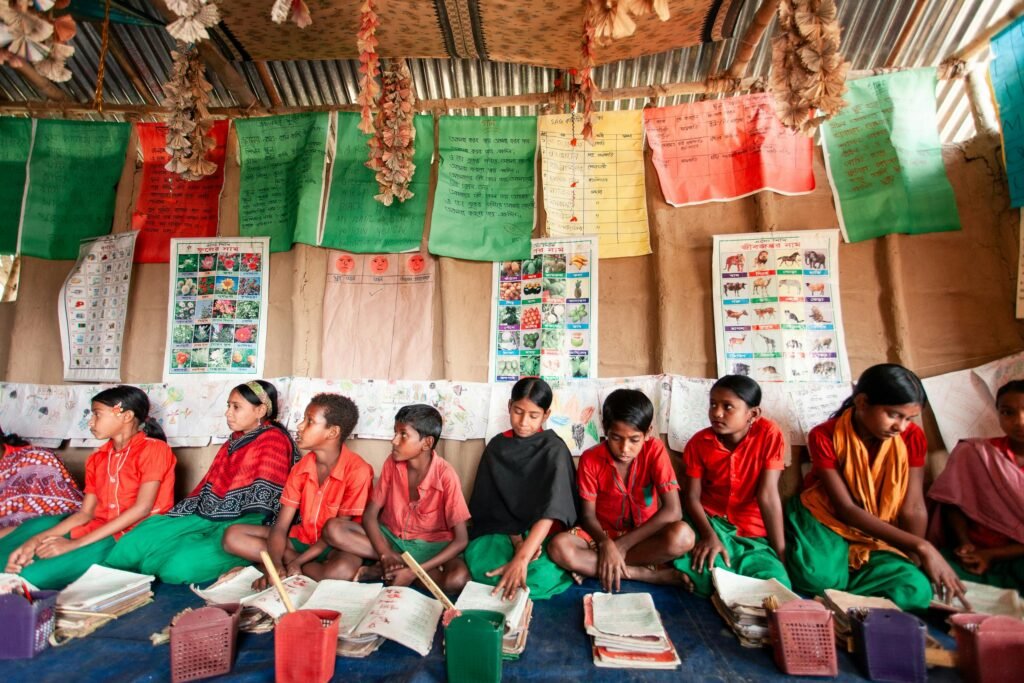
The government of India has built one of the world’s most extensive scholarship ecosystems — covering students from Class 1 to PhD, from school dropouts in tribal villages to doctoral researchers at IITs, from minority girls in Madrasa-adjacent communities to ex-servicemen’s daughters at medical colleges, and from differently-abled engineering students to SC scholars at Ivy League universities abroad.
The scholarships detailed in this guide are not charity. They are a constitutional promise — India’s commitment to equality of opportunity, regardless of caste, religion, gender, disability, or economic background.
What stands between millions of eligible Indian students and these scholarships is simply awareness and action. Many students miss out not because they are ineligible, but because no one told them these scholarships exist, or because they missed a deadline by a few days, or because their institution’s scholarship cell never informed them.
You now have the information. The next step is yours.
Here is your action plan:
- Identify every scholarship in this guide for which you are eligible
- Register on the National Scholarship Portal (scholarships.gov.in) today
- Collect your documents — income certificate, caste/community certificate, marksheets, bank details — before deadlines approach
- Contact your institution’s scholarship coordinator to ensure they are registered on NSP and will verify your application
- For the NMMS — speak to your Class 8 teacher about the examination dates in your state
- For the National Overseas Scholarship — begin your foreign university applications now if you are in your final year of postgraduate study
Every rupee of scholarship money is already budgeted. The government is waiting to disburse it. Your job is simply to apply.
Register. Apply. Renew. Succeed.
Read Also : How to Write a Winning Scholarship Application
Disclaimer: Scholarship details, stipend amounts, income limits, and deadlines are subject to change each academic year as per government notifications. Always verify the latest and most accurate information on the official National Scholarship Portal (scholarships.gov.in), the respective Ministry website, or the UGC/AICTE portal before applying. This guide is for informational purposes only and does not guarantee scholarship awards.